Reduta Palace is the city-centre home of the Ethnographic Museum of Transylvania, and arriving by car needs a different plan from visiting its outdoor park. The most useful fact for drivers is in the museum's own rules: it offers parking only for visitors with disabilities. For an ordinary visit, plan a lawful parking place and a walk to the entrance, rather than expecting a general museum car park. This guide connects that arrival decision with admission, luggage and the time you want inside. If a rental suits the wider trip, compare Cluj-Napoca car options on the homepage, then decide whether to move it for this particular outing.
Choose Reduta Palace as the destination
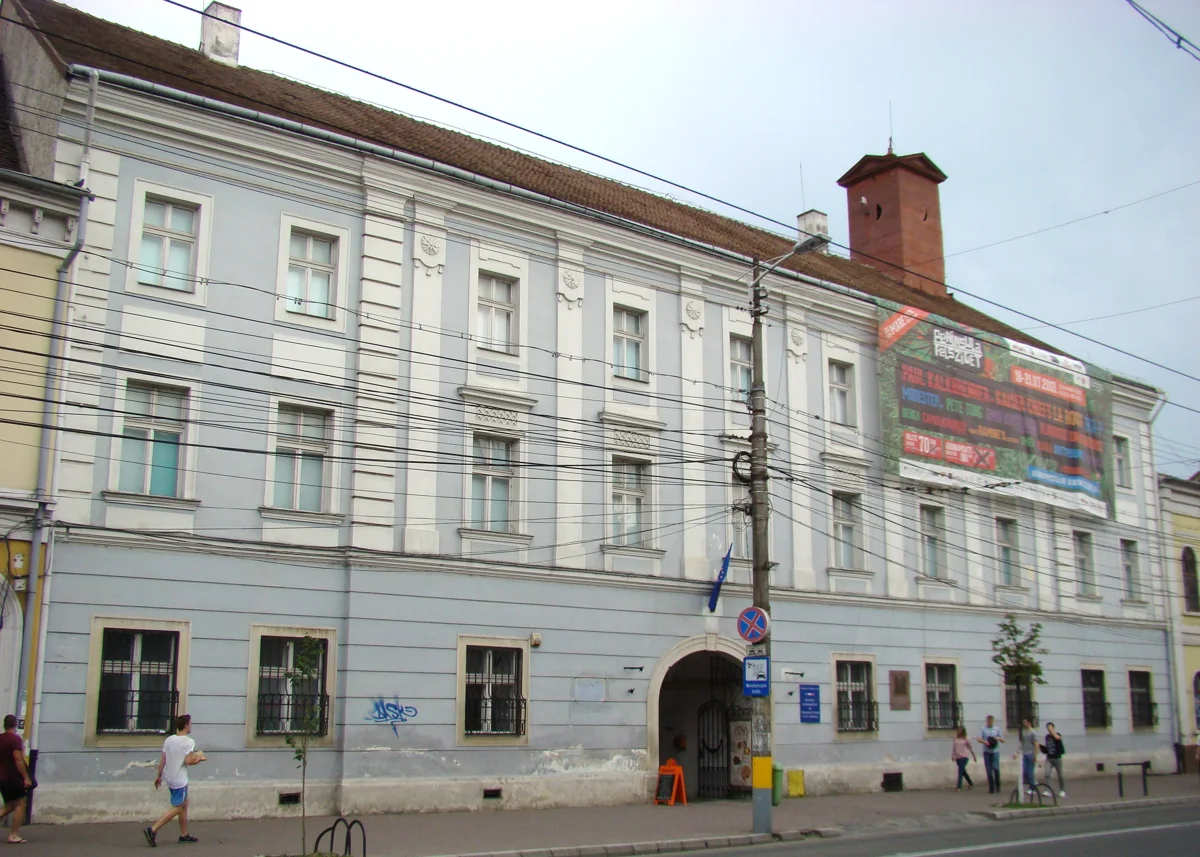
The museum's indoor site is on Memorandumului Street at number 21. The separate Romulus Vuia park is an outdoor collection elsewhere in Cluj. Both belong to the same institution, so a search for the general museum name is not enough to settle the destination. Save the full venue name and address before you start driving. Check an event ticket against that address as well: the organiser's name alone does not identify the entrance you need.
The Romulus Vuia park guide explains the other visit. Use it if traditional buildings in an outdoor setting are your main interest. Reduta is the appropriate starting point when you want the indoor museum and the historic palace. Choosing one deliberately is more useful than discovering the difference after parking at the wrong location, especially when the afternoon admission window is short.
Keep the parked-car destination separate from the walking destination in your navigation. An app can help find a route to a street or car park; it does not authorise entry, stopping or parking at the museum doorway. Save both points while stationary, review the approach and let a passenger help with directions if possible. If the suggested turn conflicts with signs, follow the signs and revise the route safely.
Use the museum's admission window
The operator's information checked on 22 November 2026 lists Reduta visits from Wednesday through Sunday, 10:00–18:00, with last entry at 17:00. This is the ordinary timetable, not a promise that every exhibition or event follows it. Check the official website again close to your visit, particularly around holidays or a dated event. The outdoor park's winter timetable is different and must not be substituted for Reduta's hours.
Treat last entry as a limit, not as the ideal arrival time. Work backwards from when your group wants to begin looking around: include parking, the walk, buying or showing tickets and sorting any belongings that cannot go inside. If the drive takes longer than expected, decide whether a shorter visit still makes sense before paying. Reaching the street before last admission does not mean you have reached the ticket desk.
Keep special events separate from general sightseeing. A concert, fair or evening programme can have its own arrangements, and a poster showing a later hour does not extend ordinary access automatically. Read the venue, date and ticket description together. If an event is the purpose of your trip, confirm its admission directly instead of treating the museum's standard opening hours as the complete answer.
Understand the parking limitation before driving
The published visitor rules say the museum provides parking only for people with disabilities. Do not interpret a photograph of a courtyard, an open gate or a car beside the building as general visitor parking permission. For most drivers, the practical plan is to use an authorised city parking option and walk. This article does not promise a nearby vacancy, a free period or a specific parking tariff.
If you need disability parking, contact the museum before travelling about availability, eligibility, the entrance and any advance arrangement. The statement that parking is offered does not establish that a space will be free at your arrival. Ask about the whole route from the vehicle to the exhibition, including any steps or assistance needed. A suitable parking position and an accessible interior route are related questions, but they are not the same one.
For city parking, read the actual location's signs and payment instructions. Check whether the chosen period covers the museum, any meal and the return walk. Keep confirmation of payment and note the car's position. If your hotel already provides suitable parking and you are staying nearby, compare leaving the vehicle there with the time needed to find a second space. A car useful for regional excursions need not be moved for every central attraction.
Deal with luggage before an airport-day visit
The museum's rules restrict bags larger than 30 by 40 by 50 centimetres, with exceptions described for folding pushchairs and mobility accessories. That matters when the visit sits between a flight and hotel check-in. Do not arrive with suitcases assuming a museum cloakroom will accept them. Ask your accommodation about confirmed storage, or arrange the sightseeing after you have dealt with your bags.
If storage is essential, confirm the service's opening, size allowance and collection time before building the day around it. An unverified locker pin on a map is not a complete plan. Keep documents, medication and other essentials with you in a manageable bag. Leaving possessions visible in a parked rental car is not a sensible substitute for arranging storage, and this guide does not suggest that any parking location guarantees security.
Allow the rental handover its own time. Check the vehicle and reservation instructions before leaving the collection point, rather than rushing because you hope to reach a museum session. The Cluj Airport car collection guide covers that stage separately. If a flight delay removes the comfortable museum window, move the optional visit to another day instead of compressing the inspection, drive and admission into a race.
Choose the exhibition experience you want
The name Reduta comes from the building's historic hall, and the operator describes a building used for civic and cultural events long before its current museum role. The museum received the premises in 1957. That background gives the visit two possible interests: the ethnographic collections and the building itself. Decide which matters most to your group, then ask at admission what is accessible during your visit.
Avoid treating a list of historic events as a room-by-room access guarantee. A building can have an important past while individual spaces are closed or used for a temporary activity. Ask staff how to follow the public route and whether the exhibition that prompted your journey is included. Do not enter an office, roped-off room or closed doorway because an old photograph shows visitors there.
Give yourself a small focus for the galleries. You might compare materials and techniques, look for differences between domestic and ceremonial objects, or follow one theme in the interpretation. These are ways of approaching a collection, not a claim that particular objects are on display today. Read labels and ask questions where needed; a brief visit with a clear interest can be more rewarding than trying to see every case at the same pace.
Separate ordinary tickets, events and guiding
The museum's rules allow different prices for temporary exhibitions or events, and guided visits are charged separately. Before paying, confirm what the selected ticket includes. If your group wants a guide, ask about the available language, timing and reservation procedure. The presence of staff supervising a room does not mean they are available to deliver an unbooked guided tour.
For an online purchase, check the exact venue and date requirements as well as the quantity and visitor categories. Keep the confirmation available for the person handling admission. This guide links to the operator for current arrangements instead of presenting an old directory price as a guaranteed total. Museum tickets are independent of a car reservation; a rental booking does not include entry, guiding or priority access.
Build a simple outing budget with separate lines for any additional rental time, fuel, lawful parking and the admission you actually select. If the car is already part of a longer stay, distinguish those extra costs from the whole week's rental price. If you would collect a vehicle solely for this central museum, include collection and return time before comparing another transport option. No fixed saving follows just from choosing one mode.
Plan the visit for mobility, children and photography
Ask about access in concrete terms: the entrance being used, stairs, lifts if available, seating, toilets and the route to the galleries you want. Describe the assistance your group needs rather than asking only whether the museum is accessible. The operator's parking provision is helpful information, but it does not answer every interior question. Agree a manageable visit length and a meeting point if people want different amounts of time inside.
For children, choose a few things to notice and keep the visit flexible. Compare shapes or materials through the displays and interpretation without touching the objects. Follow barriers and staff directions, keep access routes clear and take breaks outside the exhibition area when needed. A family outing does not need to use every remaining minute before closing to count as a worthwhile museum visit.
Check the photography arrangements before taking pictures. The visitor rules prohibit flash and describe a fee for personal, non-commercial photography; professional use needs separate permission. Do not assume that paying admission authorises equipment, lighting or commercial filming. Keep cameras and phones from obstructing other visitors, and follow any more specific instruction in the gallery. The archival exterior photograph here identifies the building; it is not a record of today's entrance arrangements.
Combine central Cluj stops without repeated parking
A straightforward structure is to leave the car lawfully, visit Reduta and continue the rest of a manageable central outing on foot. Choose any second stop by its confirmed opening and the group's energy, not by how many pins appear nearby. Include time for a meal or rest and check that the parking period still works. Moving the car between every short stop can add more uncertainty than it removes.
Combining Reduta with Romulus Vuia is a different undertaking because the outdoor park requires its own journey and visitor check. Decide which venue is the priority, verify both timetables and leave a genuine gap between them. Do not infer a combined ticket or matching last-admission rule from the shared institution. In poor weather or with limited time, choosing the indoor visit alone can be a sensible decision.
For a wider Cluj stay, separate a city museum day from an ambitious regional drive. Keeping one day relatively local can fit well between longer excursions without implying that the rental must be used continuously. If your plans change after admission, review the next destination while stopped. Retain fixed commitments such as a booked handover or accommodation arrival rather than allowing an optional second attraction to displace them.
Keep the return and vehicle choice realistic
Choose a car around the entire trip: passengers, luggage, transmission familiarity and accommodation access. A palace visit is not a reason by itself to upgrade to a large vehicle. If you are comparing transmissions, the automatic car rental guide for Cluj explains the practical checks. Confirm the actual booked category and supplier conditions; the museum's parking restriction applies regardless of how comfortable or expensive the car is.
Set a time to leave the museum that includes collecting belongings, walking back, settling any parking payment and reaching the next address. On a rental-return day, add the agreed fuel and handover requirements. Museum closing time is not your arrival time at a return location. If a delay affects the booking, contact the supplier and obtain instructions instead of assuming an extension is automatically available or free.
Before leaving accommodation, make one final check: the correct Reduta address, current admission information, a workable parking approach, luggage already dealt with and a return plan. Those details make the visit practical without promising that every space or gallery will be available. The aim is to arrive at the intended museum with time to enjoy it, then leave without sacrificing an essential appointment elsewhere.
Questions & answers
Is Reduta Palace the open-air ethnographic park?
No. Reduta is the indoor museum at Memorandumului21; Romulus Vuia is a separate outdoor destination.
Does the museum have general visitor parking?
Its published rules offer parking only to people with disabilities. Other visitors should arrange lawful city parking and a walk.
Can I take airport luggage inside?
Check the bag-size rule before travelling and arrange suitable storage. Do not assume the museum will accept suitcases.